The great, the unhealthy, and the boogiemen of shoe development.
A variety of guys begin questioning about shoe development as soon as they’ve moved previous their first spherical of disposable gown footwear. those—look first rate sufficient out of the field, however after six months the only real peels or the leather-based creases like paper. That query comes up: What makes some footwear maintain up for years, whereas others appear to age in a single day? And is it straight associated to cost?
The reply, most frequently, comes all the way down to how the only real is connected to the higher. That connection—its methodology and its supplies—has extra to do with longevity than branding and even leather-based high quality.
Importantly although, every development methodology, even these thought-about probably the most or least sturdy, has its execs and cons. What exercise the footwear is meant for use for is really what determines whether or not the development used was based mostly on sturdiness or cost-cutting.
Earlier than we get into the development strategies, we have to begin with a fast Primer on
Fundamental Shoe Anatomy
The Higher
That is the fabric above the only real that covers the foot—usually leather-based or canvas. It consists of elements just like the vamp, heel, eyelets, and extra.
The Insole
The floor contained in the shoe that your foot rests on. It may be cushioned, contoured, or leather-lined, relying on the design.
The Outsole
The underside of the shoe that touches the bottom. Outsoles could be product of leather-based, rubber, or an artificial mix.
The Welt
A strip of leather-based or different materials that sits between the higher and outsole on higher-quality footwear. It performs a key function within the sturdiness and resoling potential.
The Final
A 3D mannequin of a foot used throughout development. The form and construction of the final decide how the ultimate shoe matches and appears. Inside a model, completely different shoe strains could use completely different lasts which end in completely different matches, and could also be talked about within the product description.
The completely different shoe development strategies should not merely “good” or “unhealthy,” or a mirrored image of high quality. Understanding which methodology can greatest be used for what sort of shoe will enable you reinforce procuring choices. Figuring out how to spend on footwear will preserve you from spending extra on footwear.
Chilly Cement Building
Invented: Mid-Twentieth century (mass adoption post-WWII), expanded with artificial adhesives
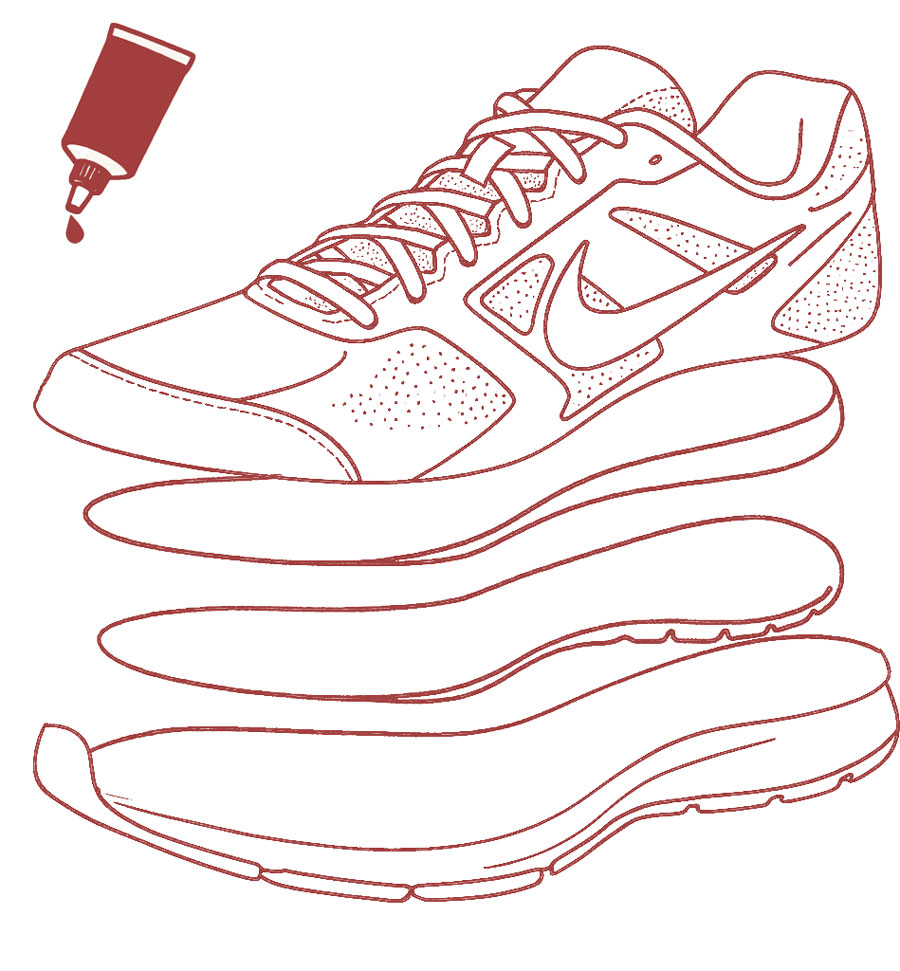
Chilly cementing is the usual methodology for attaching outsoles in most of at present’s athletic and trend sneakers. It makes use of robust artificial adhesives to bond the higher or midsole unit to the rubber or foam outsole—no warmth required.
After the shoe’s higher is assembled (usually with Strobel stitching, under, or different inside strategies), the only real unit is glued on utilizing high-strength cement. The bond units with out warmth, permitting manufacturers to make use of fashionable foams like EVA, Phylon, or polyurethane that might soften or deform underneath warmth.
What works: Trainers, trainers, streetwear sneakers, gown sneakers, foam-cushioned informal footwear. Chilly cementing allows lighter supplies and complicated sole designs with air items, flex grooves, or molded shapes.
What doesn’t: Chilly cemented footwear aren’t constructed to be resoled. As soon as the adhesive bond or foam cushioning wears out, the shoe is successfully on the finish of its life. Sturdiness varies by use, however restore choices are restricted.
Components like the kind of glue, how nicely the supplies are prepped, and the way a lot stress and time are used throughout urgent all affect sturdiness. Skipping steps or utilizing cheaper supplies can result in soles separating early.
Chilly cementing varies in high quality, and sadly, it’s not at all times straightforward to identify the distinction simply by wanting however there are a number of clues. Higher chilly cemented footwear, like these from respected athletic or life-style manufacturers, use stronger adhesives, prep supplies correctly, and infrequently incorporate design options like cup soles that wrap the higher for a safer bond.
The tactic itself isn’t inherently weak, however the execution makes all of the distinction.
It’s usually secure to say that if a product web page doesn’t point out the development methodology, it’s in all probability cemented—particularly for footwear underneath $200.
Most manufacturers spotlight Goodyear welted or Blake stitched development (each under) as a promoting level as a result of it provides worth, longevity, and resole-ability. Cemented development is cheaper and quicker to provide, and types utilizing it usually focus advertising on fashion, consolation, or supplies relatively than how the only real is connected.
There are exceptions—some small or heritage-inspired manufacturers may not listing it clearly, or a Blake-stitched shoe may fly underneath the radar—however in mainstream retail, no point out often means cemented.
Find out how to spot it: There’s often no stitching (or if there may be, its ornamental and molded into the rubber) across the outsole, only a easy glue bond the place the only real meets the higher. Gently flexing the shoe could reveal separation or a visual glue line on cheaper pairs.
Strobel Building
Invented: Mid-1900s, named after the Strobel Machine Co. in Germany
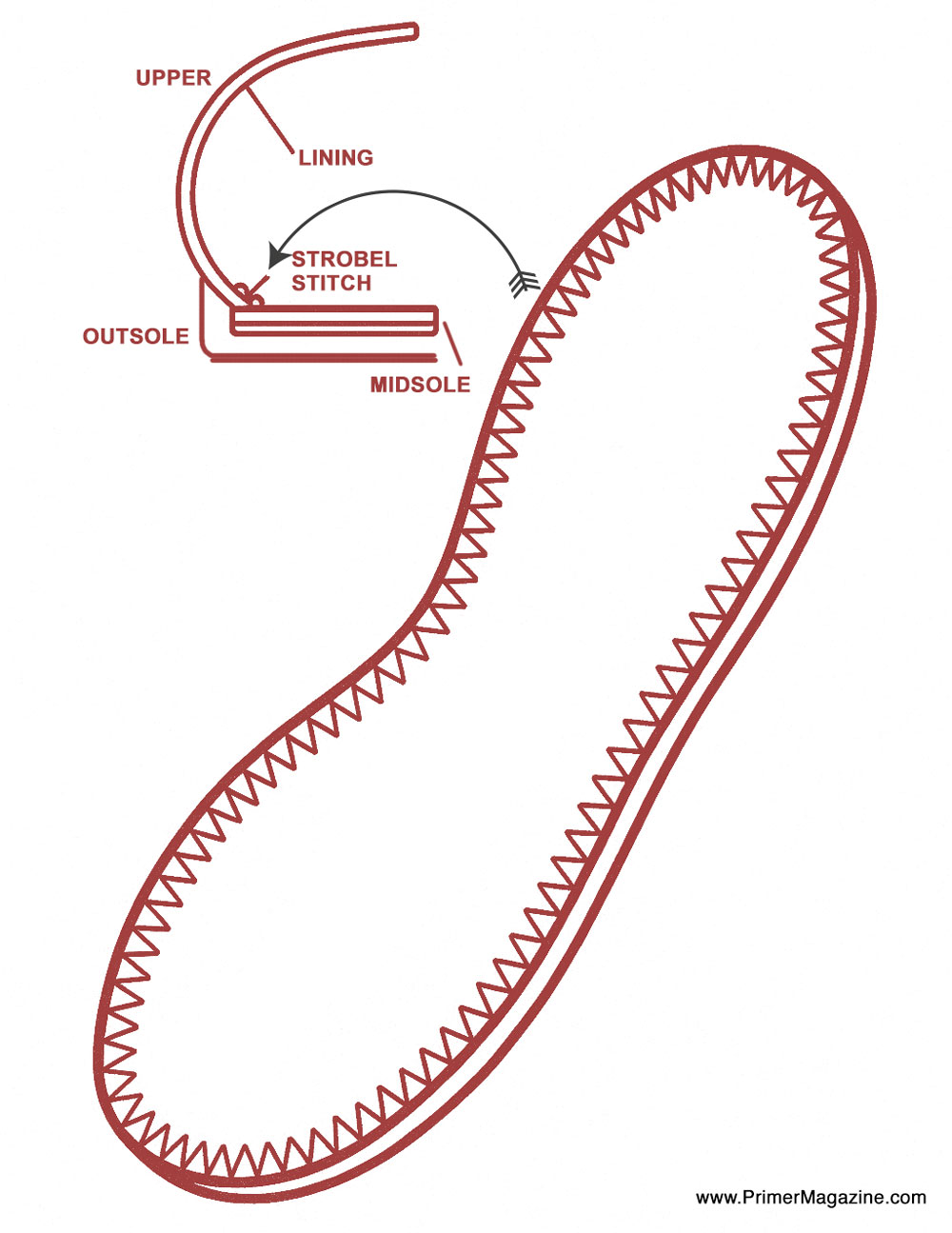
Strobel development refers to how the higher is connected to the insole unit earlier than the only real is utilized. On this methodology, a material insole board is stitched on to the sting of the higher, forming a versatile, sock-like base. This stitched higher unit is then usually chilly cemented to the outsole.
Strobel is commonly invisible to the client—it’s what’s underneath the foot, not underneath the shoe. But it surely’s a significant purpose why efficiency sneakers really feel gentle and pliable in comparison with leather-based gown footwear.
What works: Perfect for footwear the place flexibility, mild weight, and a broken-in really feel are important. Consider Nike’s Free or Flyknit strains, or most fashionable trainers. The development permits for pure foot motion and breathability.
What doesn’t: Strobel-built footwear are exhausting to restore. There’s no welt or structural basis for resoling. Similar to chilly cement development, as soon as the only real wears out or the cushioning flattens, the footwear have to get replaced.
Find out how to spot it: You possibly can’t see it from the skin, however when you raise the insole, you may spot zig-zag stitching attaching the higher to a skinny cloth layer beneath.
Blake Building
Invented: 1856 by Lyman Reed Blake, who labored for the Singer Stitching Machine Firm.

Streamlined and smooth, the higher is wrapped underneath the insole and straight stitched to the outsole with a single sew operating by means of all layers from the within. It’s a product of the Industrial Revolution and nonetheless widespread in Italian footwear at present.
What works: Slim-profile gown footwear the place you desire a clear edge and a light-weight, versatile really feel. Blake development additionally permits for resoling—so long as the cobbler has the suitable gear.
What doesn’t: Much less water resistant than Goodyear (under), and the inside sew can generally be felt underfoot. Not each cobbler can work on them, which limits restore choices in some areas.
Find out how to spot it: Look contained in the shoe, when you really feel stitching underneath the insole however don’t see any alongside the sting of the only real, it’s possible Blake-constructed.
Vulcanized Building
Invented: Mid-1800s, based mostly on Charles Goodyear Sr.’s vulcanization course of (patented in 1844)
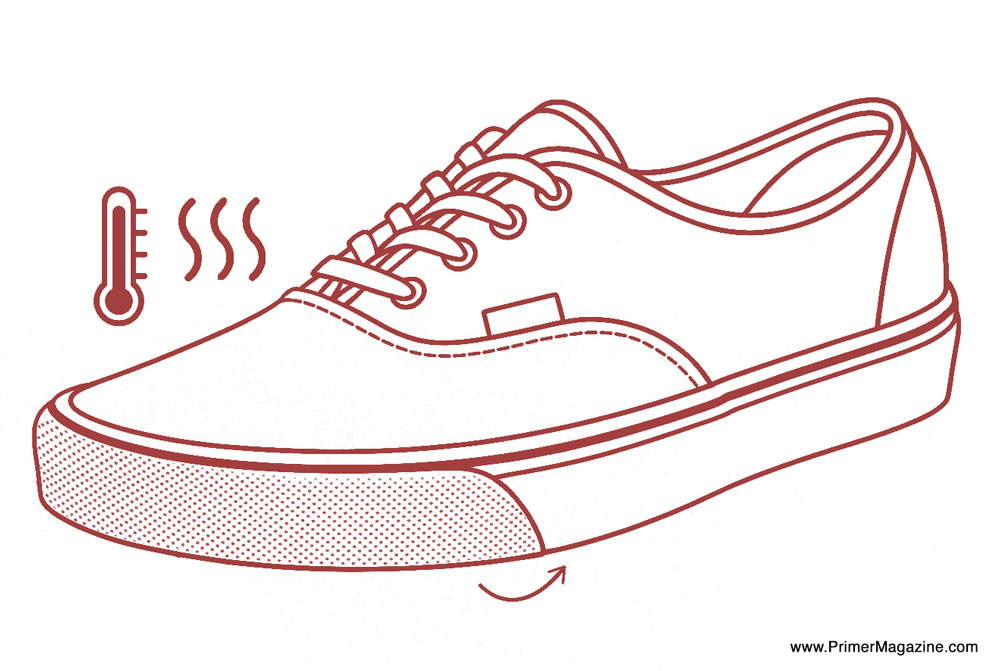
Widespread in canvas sneakers like Vans and Converse, this course of bonds uncured rubber soles to the higher, then bakes your complete shoe in a vulcanizing oven. The warmth, round 230°F, hardens the rubber right into a sturdy, springy sole and locks it to the higher with out stitching or glue.
What works: It’s splendid for informal footwear made with heat-resistant supplies like canvas, suede, or leather-based. The result’s versatile, grippy, and ideal for skateboarding or streetwear.
What doesn’t: Vulcanization limits materials decisions. Something that may soften like nylon or EVA can’t be used. It additionally requires a specialised manufacturing facility setup, so manufacturing is commonly extra area of interest. You received’t discover this methodology utilized in high-end gown footwear, and it’s not designed for resoling.
Find out how to spot it: The rubber sidewall wraps up over the higher with none stitching, and the entire shoe feels springy with a barely rubbery scent, once more, suppose Vans or Converse.
Goodyear Welt Building
Invented: Patented in 1869 by Charles Goodyear Jr. (son of the rubber vulcanization man)
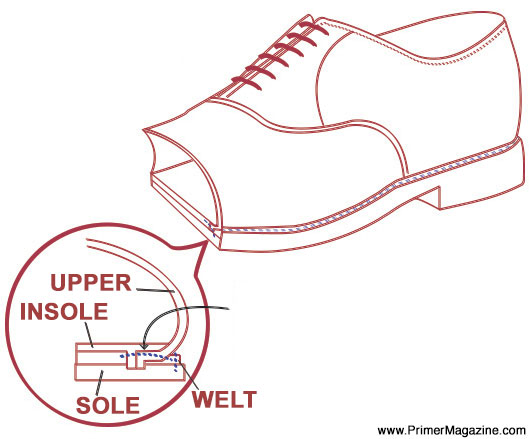
The basic customary for sturdy, repairable footwear. The higher and insole are sewn to a leather-based welt: a strip that runs across the edge. A second sew then attaches the welt to the outsole. Between these layers? A mattress of cork that molds to your foot over time.
What works: Gown boots, oxfords, brogues, or something you wish to put on for a decade. Goodyear footwear are constructed to be resoled time and again.
What doesn’t: The additional construction provides weight and rigidity. Takes time to interrupt in earlier than comfy. Often dearer, however for good purpose.
Some manufacturers additionally use a hybrid referred to as Blake Fast, the place the higher is Blake stitched to a midsole, which is then stitched to the outsole—providing extra sturdiness whereas preserving a slim profile.
Find out how to spot it: Search for seen stitching across the outsole’s edge and a small ridge the place the welt barely extends. These footwear are likely to really feel structured and weighty.
Stitchdown Building
Origin: Conventional bootmaking, with robust roots in American workwear and Pacific Northwest heritage manufacturers
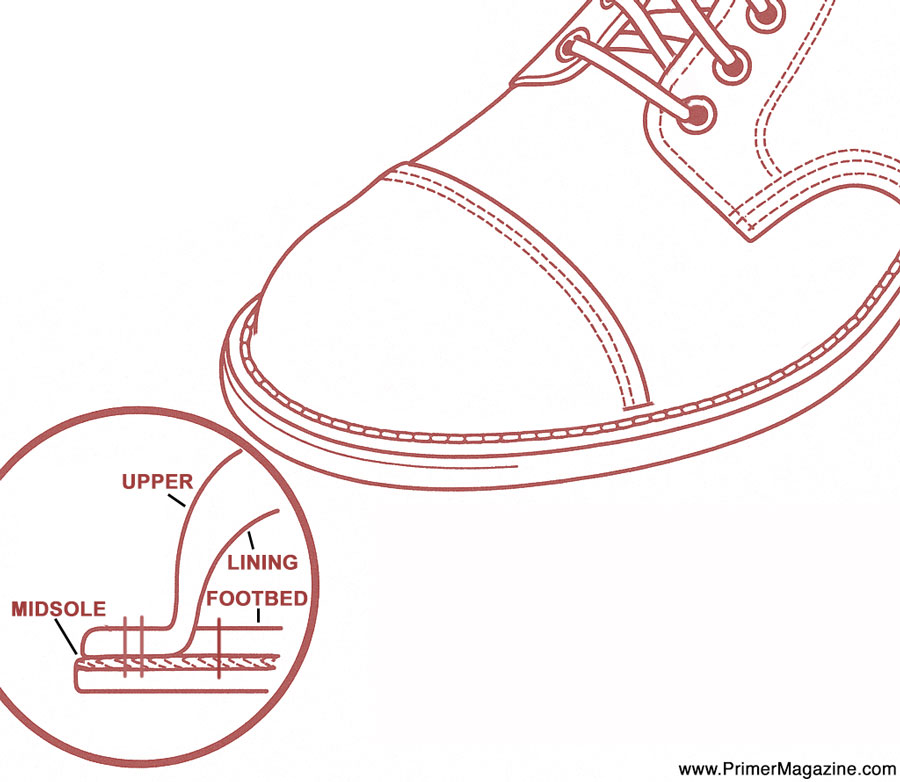
The higher is flared outward and stitched on to the midsole or outsole—no welt is used. This creates a broad, visibly stitched perimeter the place the higher folds out and turns into a part of the only real construction.
What works: A go-to for rugged, water resistant boots. Manufacturers like Viberg, White’s, Nick’s, and Danner have made stitchdown synonymous with sturdiness. It additionally seems in lower-cost fashions like Clarks Desert Boots and a few Crimson Wing choices, although high quality varies.
What doesn’t: Resoling could be tough. If a cobbler doesn’t fastidiously reuse the unique sew holes, it may possibly injury the flared leather-based and compromise the higher. Not each store is provided to do it cleanly. Often you need to ship them again to the model to be labored on.
Find out how to spot it: Search for the higher leather-based visibly folded outward and stitched flat in opposition to the sting of the only real—there’s no welt, simply uncooked leather-based and thick stitching across the base. The profile is huge, and the aesthetic leans rugged and useful.
Norwegian (Storm Welt) Building
Origin: Conventional European bootmaking
A heavy-duty variation of Goodyear welting, Norwegian development makes use of a visual double sew that runs by means of the higher and welt, then into the outsole. It additionally usually incorporates a raised storm welt that curls upward alongside the perimeter, including water resistance. The underlying development remains to be Goodyear—the storm welt is a particular fashion of welt used within the course of.
What works: Alpine-style boots, winter-ready gown boots, heritage workwear.
What doesn’t: Bulkier profile and better price. Typically extra style-specific than on a regular basis footwear.
Find out how to spot it: You’ll see two rows of sewing and a raised, curved welt around the shoe’s edge, giving it a chunkier, extra rugged profile.