President Masoud Pezeshkian, touring in southwestern and jap Iran, has acknowledged mounting public dissatisfaction and urged officers to handle the inhabitants’s considerations, calling mismanagement – not international adversaries – the first reason behind the disaster. His remarks contrasted with harder-line figures who proceed in charge unnamed “enemies” for the unrest.
The most recent protests started after the Iranian rial plunged to file lows, prompting the resignation of Central Financial institution Governor Mohammad Reza Farzin.
The broader financial backdrop is bleak: inflation stays above 40 %, meals and family prices have surged, and practically each main sector exterior oil is contracting.
“The continued, nonetheless comparatively small, financial protests now unfolding in a number of cities in Iran are the most recent indicator of the Islamic Republic’s fragility,” Center East Knowledgeable and former Nationwide Safety Supervisor for Iran at ODNI, Norm Roule tells The Cipher Transient.
Roule explains on this unique Cipher Transient evaluation, why he believes the most recent protests are probably an indication of what may very well be ready for Tehran within the new 12 months.
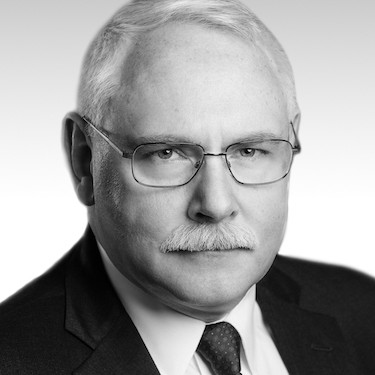
Norman T. Roule
Norman Roule is a geopolitical and vitality advisor who served for 34 years within the Central Intelligence Company, managing quite a few packages regarding Iran and the Center East. He additionally served because the Nationwide Intelligence Supervisor for Iran (NIM-I)n at ODNI, the place he was accountable for all points of nationwide intelligence coverage associated to Iran.
ANALYSIS — “Since 2017, Tehran’s home oppression, persistent inflation, declining requirements of dwelling, worldwide isolation, and weak home coverage credibility have produced intervals of sharp and widespread unrest. Iran’s safety forces have responded brutally. However the protests have shattered the Islamic Republic’s political self-confidence. Tehran’s response to the continuing demonstrations displays that temper.
A regime that when boasted that its excessive nationwide election turnout mirrored the assist of its folks is now unable to cover historic low voter turnout and accepts the specter of destabilizing nationwide unrest as an inevitable consequence of life in modern-day Iran. Financial challenges should not the regime’s solely concern. Iran’s historic drought and different environmental issues persist. Winter noticed a pointy decline in air high quality in massive areas of Tehran, Khuzestan, and Isfahan provinces. In early December, Iran’s well being minister introduced that ongoing air air pollution issues had despatched greater than 170,000 Iranians to emergency wards with coronary heart and respiratory issues.
Whether or not the present unrest expands or dissipates – like prior waves of protest – stays unsure. What’s clearer is that the underlying drivers are sturdy, making future episodes nearly sure. The extra consequential query is whether or not disillusionment will stay confined to civilians or will start to check the cohesion and confidence of the safety forces the Islamic Republic has relied upon for therefore a few years to comprise dissent.
The continued collapse of Iran’s foreign money, the rial, ignited the protests this week. After the foreign money fell as little as 1.42 million per greenback, Central Financial institution Governor Mohammad Reza Farzin resigned. The magnitude of the slide is finest understood with some historical past: In 1979, the Iranian rial stood at 72 to the greenback. On July 14, 2015, the day the Iran nuclear deal was signed in Vienna, the Iranian rial was at 29,500 per greenback. When Farzin entered workplace in December 2022, the rial traded at about 430,000 to the greenback. Regardless of the exact benchmarks, the pattern is unmistakable: the rial’s weak spot has develop into each a logo of coverage failure and a driver of unrest.
The foreign money’s decline has coincided with bleak financial alerts. Apart from anemic development within the oil sector, each key sector of Iran’s economic system is getting into recession, foreshadowing increased unemployment. Business and mining declined by 3.4%, development by 12.9% and agriculture contracted by 2.9%. On the similar time, inflation is rising. The Statistical Heart of Iran (SCI) reported that Iran’s common annual inflation reached 42.2% in December. A detailed examination of this quantity signifies the numerous affect of inflation on Iranian shoppers. Meals, tobacco, and drinks rose 72% 12 months over 12 months. This persistent excessive inflation erodes the buying energy of Iranians and drives an rising quantity into poverty.
Tehran’s choices are few. Iran’s issues are deep and structural, and sturdy enchancment would require political and ideological shifts past what the Pezeshkian administration is probably going in a position to ship. Even so, the federal government shall be compelled to behave on three fronts.
First, Farzin’s resignation gives the president with a handy focus for public anger, however it does nothing to handle the problems that precipitated the disaster: fiscal mismanagement, sanctions strain, and continual credibility deficits. President Pezeshkian has reportedly chosen 64-year-old former economic system minister Abdolnaser Hemmati as Farzin’s successor.
Hemmati might at first appear a counterintuitive alternative, provided that the Iranian Parliament impeached him in March for failing in comparable circumstances. Nevertheless, he has a background that provides potential for stability. First, he’s skilled. He led the Central Financial institution of Iran (CBI) from 2018 till late Could 2021, in the course of the Trump administration’s earlier sanctions, and his work helped stabilize the international trade market underneath comparable troublesome circumstances. He additionally qualifies as a regime insider with a long time of expertise with hardliners and extra pragmatic conservatives. After starting his profession as an agricultural economist, he moved to Iran’s broadcasting group, the place he rose to develop into its political deputy and director common of reports broadcasting. He then grew to become the Director of Iran’s Central Insurance coverage Company. Between 2006 and 2016, Hemmati led Sina Financial institution and Financial institution Mellat, banks with shut ties to the Revolutionary Guard’s Qods Drive, to the extent that the U.S. and the European Union designated every. Hemmati tried to enter the 2024 presidential election on a platform providing financial stabilization, however the Guardian Council rejected his candidacy. He as a substitute grew to become Pezeshkian’s economic system minister, a place he held till his impeachment on 2 March 2024, following a spike in inflation and the rial’s fall to 950,000 to the greenback. Satirically, that worth could be seen as a major enchancment in its standing right now.
Hemmati might want to work rapidly with Pezeshkian to suggest measures to decelerate inflation, with an emphasis on defending low-income and rural households. Within the medium time period, Hemmati might want to goal Iran’s banking sector to strengthen steadiness sheets and forestall additional failures. The draw back of this final step is that it’s going to inevitably contain some recognition of dangerous loans and credit score tightening to forestall further poor mortgage issuance.
Subsequent, Pezeshkian will deal with finances reform. Particulars on his newest finances are restricted, however we all know that safety and navy entities stay well-resourced, which is able to constrain his choices on the civilian facet. He has proposed a 20% wage improve for public employees, however it is not going to sustain with inflation, and even right here, he’ll battle to search out the funds. The finances debate will proceed till 20 March 2026, and can probably stay contentious, given its emphasis on tax assortment and subsidy cuts slightly than oil revenues as a supply of revenue.
Final, international coverage will stay essentially the most difficult facet of Pezeshkian’s financial challenges. His authorities will do no matter it may possibly to mitigate the affect of sanctions by way of engagement with Russia, China, and Africa, and can proceed to hunt talks with Washington. Initiating negotiations with the U.S., even and not using a prospect of an end result, has prior to now strengthened the rial. But when Pezeshkian would welcome talks with the West, the hardline actors inside the regime accountable for Iran’s international coverage stay centered on aggressive objectives that stay one of many major obstacles to peace within the area. The Quds Drive exhibits each signal of searching for to rebuild its shattered proxies and set up new relationships with the Khartoum and different actors in Africa. The Trump administration’s method to Tehran has been constant. It is not going to waste time on talks that supply sanctions reduction with out seismic modifications within the regime’s method to nuclear, missiles, and regional points. Gulf Arabs are keen to take care of a method of détente however is not going to contemplate rapprochement with out an finish to Qods Drive exercise within the area. Absent political rapprochement and a perception that capital invested in Iran is not going to be topic to terrorism or human rights sanctions, international funding for Iran will stay unimaginable.
Final, Iran’s leaders will inevitably acknowledge that this unrest is unfolding amid a number of hallmarks of a pre-revolutionary state of affairs: institutional failure, fragmentation among the many ruling elites, generational alienation, persistent fiscal disaster, widespread financial struggling, class antagonism, escalating and continual protests, and the absence of a unifying state narrative. President Pezeshkian not too long ago acknowledged that his nation was “in a full-fledged battle with America, Israel, and Europe.” Such rhetoric will play to home hardline audiences whereas reinforcing Iran’s aggressive fame overseas. Throughout this delicate interval, Iran is unlikely to take actions that may additional exacerbate its home fragility and as a substitute seeks to regularly take a look at Western crimson traces whereas navigating the Islamic Republic by way of what stays the regime’s most delicate and difficult financial and political interval because the Eighties.”
Are you Subscribed to The Cipher Transient’s Digital Channel on YouTube? There is no such thing as a higher place to get clear views from deeply skilled nationwide safety specialists.
Learn extra expert-driven nationwide safety insights, perspective and evaluation in The Cipher Transient as a result of Nationwide Safety is Everybody’s Enterprise.