Within the rolling hills of Berkeley, California, an AI agent is supporting high-stakes physics experiments on the Superior Mild Supply (ALS) particle accelerator.
Researchers on the Lawrence Berkeley Nationwide Laboratory ALS facility just lately deployed the Accelerator Assistant, a big language mannequin (LLM)-driven system to maintain X-ray analysis on monitor.
The Accelerator Assistant — powered by an NVIDIA H100 GPU harnessing CUDA for accelerated inference — faucets into institutional information knowledge from the ALS help crew and routes requests via Gemini, Claude or ChatGPT. It writes Python and solves issues, both autonomously or with a human within the loop.
That is no small activity. The ALS particle accelerator sends electrons touring close to the velocity of sunshine in a 200-yard round path, emitting ultraviolet and X-ray gentle, which is directed via 40 beamlines for 1,700 scientific experiments per yr. Scientists worldwide use this course of to check supplies science, biology, chemistry, physics and environmental science.
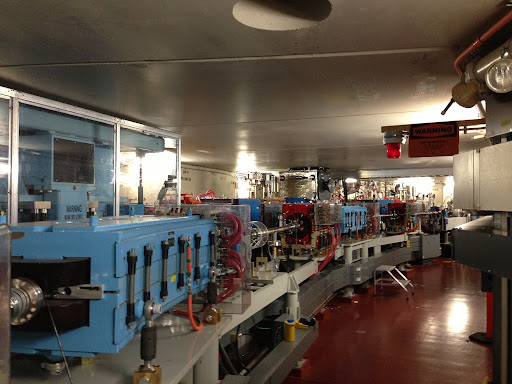
On the ALS, beam interruptions can final minutes, hours or days, relying on the complexity, halting concurrent scientific experiments in course of. And far can go fallacious: the ALS management system has greater than 230,000 course of variables.
“It’s actually essential for such a machine to be up, and after we go down, there are 40 beamlines that do X-ray experiments, and they’re ready,” stated Thorsten Hellert, employees scientist from the Accelerator Know-how and Utilized Physics Division at Berkeley Lab and lead creator of a analysis paper on the groundbreaking work.
Till now, facility employees troubleshooting points have needed to shortly determine the areas, retrieve knowledge and collect the best personnel for evaluation beneath intense time strain to get the system again up and working.
“The novel strategy affords a blueprint for securely and transparently making use of massive language model-driven techniques to particle accelerators, nuclear and fusion reactor amenities, and different complicated scientific infrastructures,” stated Hellert.
The analysis crew demonstrated that the Accelerator Assistant can autonomously put together and run a multistage physics experiment, chopping setup time and lowering efforts by 100x.
Making use of Context Engineering Prompts to Accelerator Assistant
The ALS operators work together with the system via both a command line interface or Open WebUI, which allows interplay with numerous LLMs and is accessible from management room stations, in addition to remotely. Underneath the hood, the system makes use of Osprey, a framework developed at Berkeley Lab to use agent-based AI safely in complicated management techniques.
Every consumer is authenticated and the framework maintains customized context and reminiscence throughout periods, and a number of periods may be managed concurrently. This enables customers to prepare distinct duties or experiments into separate threads. These inputs are routed via the Accelerator Assistant, which makes connections to the database of greater than 230,000 course of variables, a historic database archive service and Jupyter Pocket book-based execution environments.
“We attempt to engineer the context of each language mannequin name with no matter prior information we’ve from this execution up up to now,” stated Hellert.
Inference is completed both regionally — utilizing Ollama, which is an open-source software for working LLMs with a private laptop, on an H100 GPU node situated inside the management room community — or externally with the CBorg gateway, which is a lab-managed interface that routes requests to exterior instruments comparable to ChatGPT, Claude or Gemini.
The hybrid structure balances safe, low-latency, on-premises inference with entry to the most recent basis fashions. Integration with EPICS (Experimental Physics and Industrial Management System) allows operator-standard security constraints for direct interplay with accelerator {hardware}. EPICS is a distributed management system utilized in large-scale scientific amenities comparable to particle accelerators. Engineers can write Python code in Jupyter Pocket book that may talk with it.
Principally, conversational enter is become a transparent pure language activity description for goals with out redundancy. Exterior information comparable to customized reminiscence tied to customers, documentation and accelerator databases are built-in to help with terminology and context.
“It’s a big facility with plenty of specialised experience,” stated Hellert. “A lot of that information is scattered throughout groups, so even discovering one thing easy — just like the deal with of a temperature sensor in a single a part of the machine — can take time.”
Tapping Accelerator Assistant to Help Engineers, Fusion Power Improvement
Utilizing the Accelerator Assistant, engineers can begin with a easy immediate describing their objective. Behind the scenes, the system attracts on fastidiously ready examples and key phrases from accelerator operations to information the LLM’s reasoning.
“Every immediate is engineered with related context from our facility, so the mannequin already is aware of what sort of activity it’s coping with,” stated Hellert.
Every agent is an skilled in that subject, he stated.
As soon as the duty is outlined, the agent brings collectively its specialised capabilities — comparable to discovering course of variables or navigating the management system — and might mechanically generate and run Python scripts to research knowledge, visualize outcomes or work together safely with the accelerator itself.
“That is one thing that may prevent severe time — within the paper, we are saying two orders of magnitude for such a immediate,” stated Hellert.
Trying forward, Hellert goals to have the ALS engineers put collectively a wiki that paperwork the various processes that go on to help the experiments. These paperwork might assist the brokers run the amenities autonomously — with a human within the loop to approve the plan of action.
“On these high-stakes scientific experiments, even when it’s only a TEM microscope or one thing that may price $1 million, a human within the loop may be crucial,” stated Hellert.
The work has already expanded past ALS as a part of the DOE’s Genesys mission, with the framework being deployed throughout U.S. particle accelerator amenities. Subsequent up, Hellert simply started collaborating with engineers on the ITER fusion reactor — the world’s largest — in France for implementing the framework to be used within the fusion reactor facility. He additionally has a collaboration within the works with the Extraordinarily Giant Telescope ELT, in northern Chile.
Benefiting Humanity: Scientific Impression of Experiments Supported by ALS
Past optimizing the accelerator and different industrial operations, the work on the ALS straight allows scientific breakthroughs with world influence. The ability’s secure X-ray beams underpin analysis in well being, local weather resilience and planetary science.
Throughout the COVID-19 pandemic, ALS researchers helped characterize a uncommon antibody that would neutralize SARS-CoV-2. Structural biology experiments at Beamline 4.2.2 revealed how six molecular loops of the antibody latch onto and disable the viral spike protein. The findings supported the speedy growth of a therapeutic that remained efficient via a number of variants.
ALS science additionally contributes to climate-focused analysis. Steel-organic frameworks (MOFs) — a category of porous supplies able to capturing water or carbon dioxide from air — have been extensively studied throughout a number of ALS beamlines. These experiments supported foundational work that in the end led to the 2025 Nobel Prize in Chemistry, recognizing the transformative potential of MOFs for sustainable water harvesting and carbon administration.
In planetary science, ALS measurements of samples returned from NASA’s OSIRIS-REx mission helped hint the chemical historical past of asteroid Bennu. X-ray analyses supplied proof that such asteroids carried water and molecular precursors of life to early Earth, deepening our understanding of the origins of the planet’s liveable circumstances.