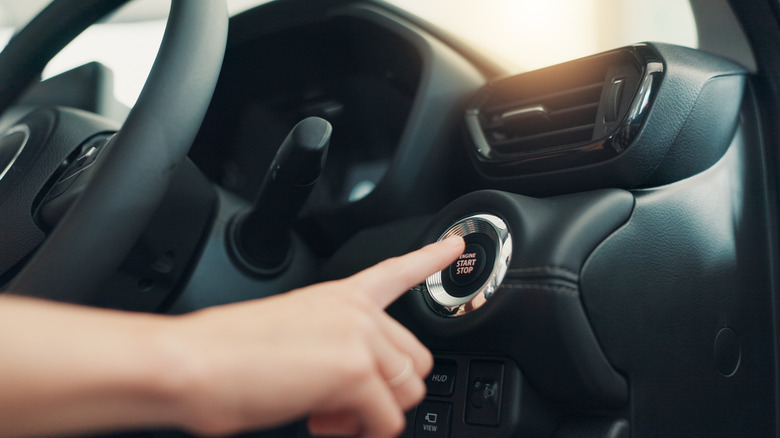
We will most likely all agree that drunk driving is unhealthy. However ought to your automotive be capable to shut itself down if it decides it does not like the way in which you are driving? Final week, Congress voted to not repeal a regulation that might require vehicles to do precisely that, experiences NewsNation. The web is now in an uproar about how there’s going to be a “kill swap” in each automotive that the federal government can activate anytime they need to cease your automotive. That half is not true, as we have coated earlier than, however the fact continues to be considerably alarming.
The regulation in query is the HALT Drunk Driving Legislation, a well-meaning regulation backed by Moms Towards Drunk Driving. Signed into regulation as a part of the Biden Administration’s 2021 Infrastructure Funding and Jobs Act, it requires vehicles to find out whether or not the individual behind the wheel is simply too impaired to drive in one in all 3 ways:
(A) screens a driver’s efficiency to determine impairment of a driver;
(B) a system which passively detects a blood alcohol degree equal to and exceeding .08 blood alcohol content material; or
(C) an identical system which detects impairment and prevents or limits car operation;
The requirement for “a passive system” prohibits current breathalyzer ignition interlock gadgets, an energetic system that no person actually needs to make use of anyway. The Driver Alcohol Detection System for Security is a system that would work for this goal, scanning both the air you naturally exhale or your pores and skin via the engine begin button to find out blood alcohol content material. Sadly, the DADSS web site has not been up to date in years, and it nonetheless guarantees deployment in shopper autos by 2024. So the duty falls to the car itself to observe the driving force’s efficiency earlier than and/or whereas they drive, probably utilizing current expertise like cameras, sensors, and different telemetry.
An imperfect system
The principle benefits of utilizing tools already constructed into your automotive for this kind of system are simplicity and decreased price. However there are many points to contemplate. For starters, current sensors are fairly straightforward to idiot, as we have seen with defeat gadgets that idiot self-driving vehicles into pondering the driving force’s fingers are on the steering wheel. Then, there are potential false positives, the place the system thinks you are too impaired to drive, however you are as sober as a choose.
This challenge is what impressed Rep. Thomas Massie to introduce an modification to defund this regulation. “Your dashboard shouldn’t be choose, jury, and executioner,” mentioned Massie in an X submit. He factors out that there is no such thing as a recourse as soon as your automotive determines you are impaired, appropriately or in any other case, and no clear methodology to regain entry to your personal automotive as soon as it is shut down. He additionally identified that NHTSA has blown its 2024 deadline and nonetheless not submitted a draft proposal for precisely easy methods to implement this, but the regulation is meant to take impact this yr.
Rep. Scott Perry, who backed Massie’s modification, added that in case your automotive can shut itself down as a result of it thinks you are drunk, it is no technological leap to offer the federal government the power to close it down remotely, throwing gasoline on the “kill swap” rumor mill hearth.
Privateness is a giant concern too
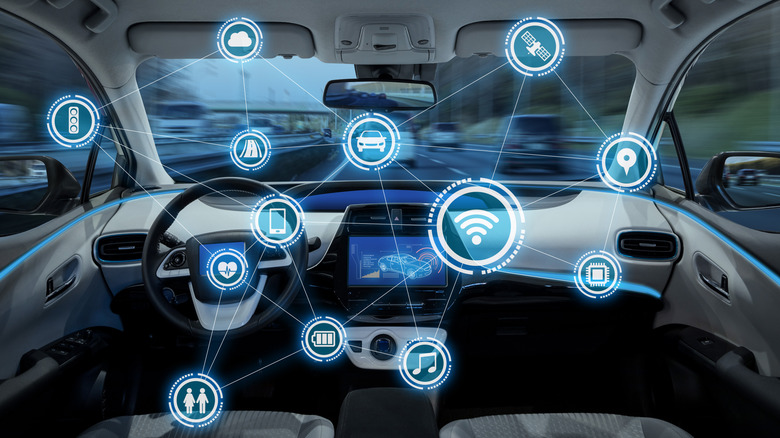
One other challenge the regulation has not adequately addressed are the privateness considerations concerned. If extra sensors or methods are added to autos, they could possibly be logging and storing all kinds of information about driving habits and driving historical past. Who owns the info these sensors generate? The place is it saved? Who has entry to it? Does the digicam that is presupposed to be ensuring you are sober enable anybody to spy on you as you drive? So far, auto producers have executed a somewhat poor job at defending the privateness of your information, and in some instances have bought it to 3rd events, so there’s not a number of inherent belief that the info these methods accumulate will likely be stored personal.
The regulation’s intentions are good. Drunk drivers needs to be stored off the roads, and the strategies prescribed are intriguing, so long as they work correctly. However the expertise to implement the regulation successfully does not appear to exist but, and the legally mandated timeline to place this expertise in vehicles it this yr will not be possible.